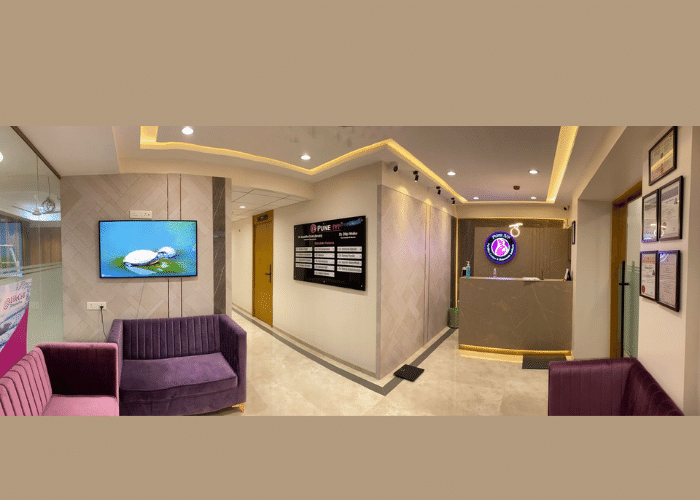
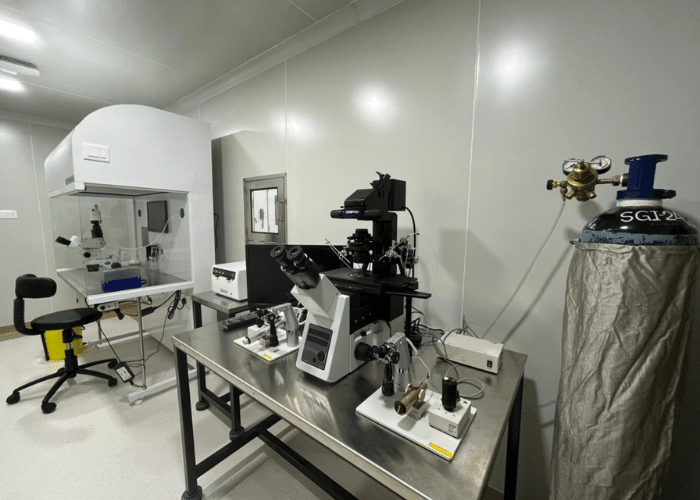
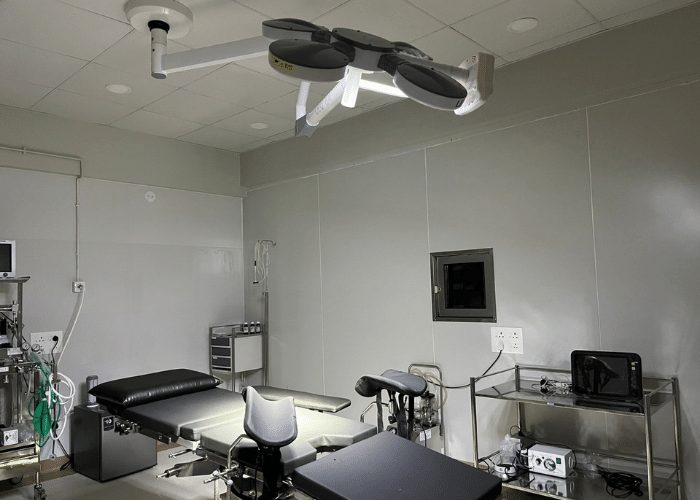
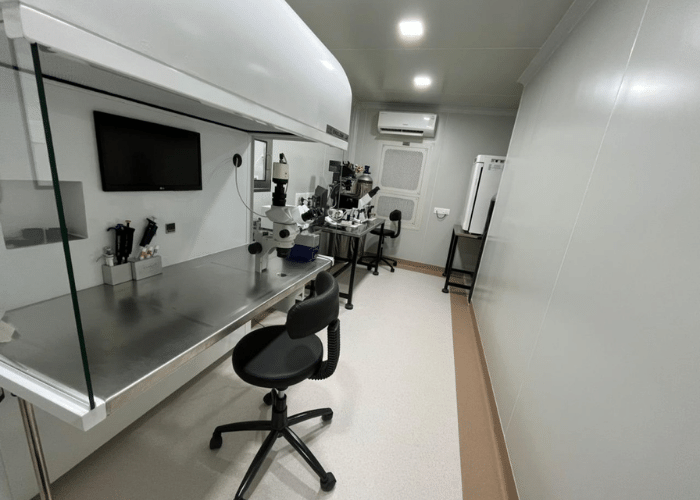
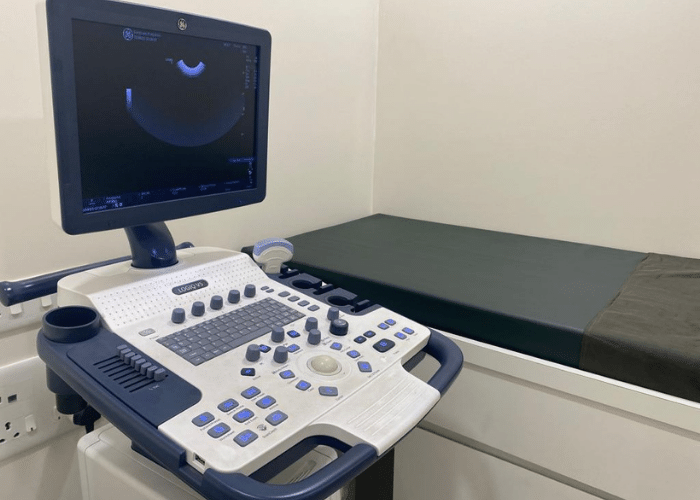
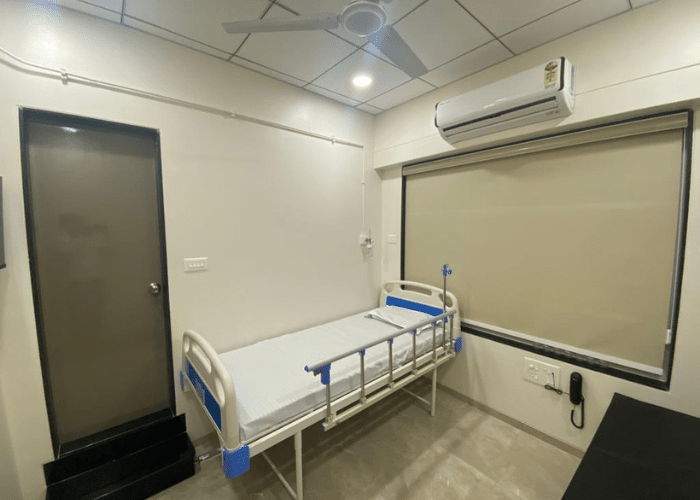
Pimpri Chinchwad's advanced embryology lab — precision laser hatching to give embryos a better chance at implantation.
Laser Assisted Hatching (LAH) is a specialised embryology technique used alongside IVF, in which a computer-controlled laser gently thins or opens a small area of the embryo's outer shell, called the zona pellucida. In a natural pregnancy, an embryo needs to "hatch" out of this shell before it can implant into the uterine lining. In some cases, this shell is thicker or harder than usual, making natural hatching more difficult.
By creating a precise, controlled opening in the zona pellucida before transfer, laser hatching gives the embryo an easier path to hatch and attach to the uterine wall, improving the chances of successful implantation
Your embryologist will assess your embryos under the microscope and recommend laser hatching only when it's likely to genuinely improve your chances.
Laser hatching isn't needed for every IVF cycle — it's usually recommended in specific situations where natural hatching may be harder for the embryo. Here's when doctors typically suggest it.
When the fallopian tubes are blocked or damaged, IVF bypasses them entirely by fertilising the egg outside the body.
Women with age-related fertility issues often have embryos with a naturally thicker zona pellucida, which laser hatching can help thin before transfer.
Patients undergoing frozen embryo transfer are frequently recommended laser hatching, since the freeze-thaw process can sometimes harden the embryo's outer shell.
Cases with embryos showing a thickened zona pellucida on microscopic examination are among the clearest indications for this technique.
Couples with unexplained infertility where other approaches have not worked may benefit from laser hatching as an additional support step during their IVF cycle.
Advanced maternal age can make it harder for the embryo to naturally hatch, so laser hatching is often used to support implantation in these cycles..
When embryology assessment confirms a thicker-than-usual zona pellucida, laser hatching gives the embryo direct assistance in breaking through the shell.
IVF procedures that have previously failed for unclear reasons are often revisited with laser hatching added to the next cycle's protocol.
From your first consultation to a confirmed pregnancy test, here's what the laser hatching journey actually looks like.
Your journey begins with a detailed consultation with our fertility specialists, reviewing your medical history, reproductive goals, and prior treatments. If laser hatching is appropriate, we explain the procedure clearly so you can decide with confidence.
Hormonal medications are carefully prescribed to support the development of multiple mature eggs, with dosages tailored to your needs. Once mature, eggs are retrieved under conscious sedation through a minimally invasive procedure.
Retrieved eggs are fertilised in a controlled lab environment through conventional IVF or ICSI, depending on your clinical situation. Embryos are then closely monitored over the following days as they develop.
Embryos are carefully observed as they grow, and only those reaching the required stage of development are chosen. These healthy embryos are selected for the laser hatching procedure.
The selected embryo is placed under a high-powered microscope with a micromanipulator and laser system to assess the zona pellucida's thickness. It's then gently stabilised with a holding pipette while the opening site is identified.
A precise, computer-controlled laser creates a tiny opening or thins part of the zona pellucida without touching the embryo itself. This is carried out by trained embryologists under strictly regulated lab conditions.
The embryologist verifies that the opening is adequate to allow natural hatching later on. The embryo's overall condition is reassessed before moving forward.
Once hatching is complete, the embryo is gently placed into the uterine cavity using a fine catheter — a quick, painless step needing no anaesthesia. The number transferred depends on embryo quality, your age, and preferences./p>
A pregnancy test is typically scheduled about two weeks after transfer to check the outcome. If confirmed, continued monitoring and clinical support follow to guide maternal and fetal wellbeing.
Laser hatching helps embryos attach to the uterine wall more effectively, giving them a more direct path through the outer shell.
This technique is particularly beneficial for women over 35 or those who have experienced past IVF failures, where natural hatching may be less reliable.
Laser hatching offers a more controlled, accurate process compared to older methods like mechanical or chemical hatching, reducing the margin for error.
By supporting the natural hatching process, this technique increases the overall likelihood of achieving a successful pregnancy.
A well-timed, precise opening in the zona pellucida gives the embryo a smoother path to implant securely into the uterine lining.
Combined with other IVF lab techniques, laser hatching has been shown to support meaningfully higher pregnancy rates in suitable candidates.
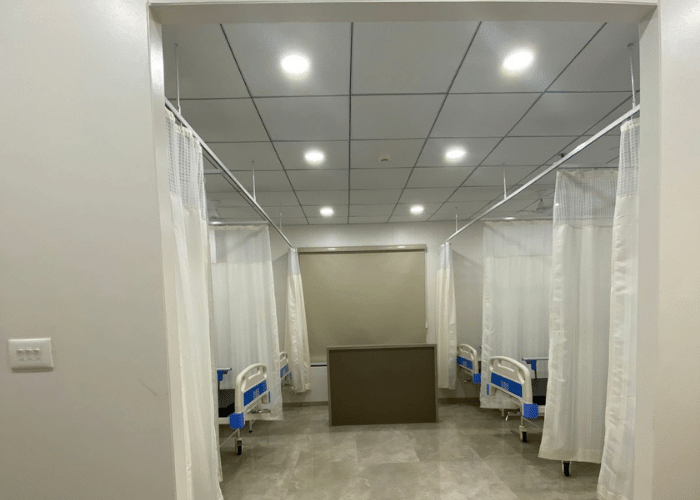
Take a look around our clinic, labs, and patient care spaces.



Real stories from real families who found success with us.
EXCELLENT
Based on 195 reviews
Posted on Google![]()
Seema LondheTrustindex verifies that the original source of the review is Google.
GoodPosted on Google![]()
bhushan bangalTrustindex verifies that the original source of the review is Google.
I had very good experience with Dr.Samidha dalvi ma'am. She is very kind understanding and explain everything clearly. Thank you dr. Samidha mam for your guidance and support ❤️Posted on Google![]()
Prachi GodambeTrustindex verifies that the original source of the review is Google.
पुणे ivf la maza अनुभव खूप चांगला होता..समिधा दळवी मॅडमची आम्हाला खूप मदत झाली.. त्यांचा experiance खरच खूप आहे..त्याच्या मुळेच आज आम्हाला आमच्या आयुष्यातली गोड बातमी समजली..त्यांची treatment खूप चांगली आहे. समजून सांगतात खूप त्यामुळे पेशंट चा धीर खचत नाही..स्टाफ सुद्धा खूप हेल्पफुल आणि चांगला आहे. Thank you pune ivf🌹🙏Posted on Google![]()
Tushar STrustindex verifies that the original source of the review is Google.
Pune IVF centre kharch kup chan ahe mla 6th month madhech result ala ahe kharch mla vishwas basht nahi mla evdya lavkr result ala te pn kharch kup chan hospital ahe ani doctor.samidha madam kharch kup chan padhtini saghle samjun saghtat..ani arti sister ani Sandhya sister pn kup chan kalji ghetat ...maze samidha madam ni kup varshyache swapn purn kel ahe thank you so much madam nd All of you ❤️🙏😊Posted on Google![]()
Hire KarishmaTrustindex verifies that the original source of the review is Google.
Best centre in Pune. Trustable 🤝
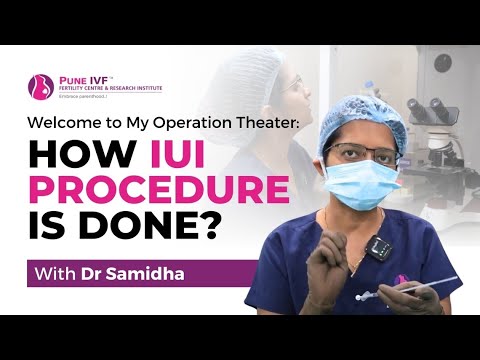
Hear it from Dr. Samidha herself — real explainers on Laser Assisted Hatching Treatment
IVF Procedure Explained (Hindi)

The cost of laser hatching depends on whether it's added to a fresh or frozen embryo transfer cycle, along with any additional lab procedures required. We share complete cost details upfront during your consultation.
No, it's generally recommended only in specific situations, such as repeated implantation failure, a thickened zona pellucida, advanced maternal age, or frozen embryo transfer cycles. Your embryologist will advise if it's right for your case.
Yes, we offer zero-cost EMI options so that treatment cost is never a barrier to your fertility journey. Ask our team about available plans during your consultation.
Yes, the procedure uses a precise, computer-controlled laser that only affects the outer shell of the embryo, without touching or damaging the cells inside.
No single technique can guarantee pregnancy, but laser hatching is designed to remove one possible barrier to implantation, improving the embryo's overall chances in suitable cases.
Yes, it's commonly used with FET cycles, since the freeze-thaw process can sometimes harden the zona pellucida, making assisted hatching particularly useful.
Laser hatching uses a highly controlled, computer-guided laser to create a precise opening, offering greater accuracy and consistency compared to older mechanical or chemical hatching methods.
It's performed in the embryology lab shortly before embryo transfer, once the embryo has reached the appropriate stage of development.
An unsuccessful cycle doesn't mean the end of the road. Your doctor will review the cycle details and may recommend adjustments, further testing, or a different protocol for the next attempt.
How soon after embryo transfer is the pregnancy test done?
Share a few details and our team will call you back to guide you through the next step.
Your details