
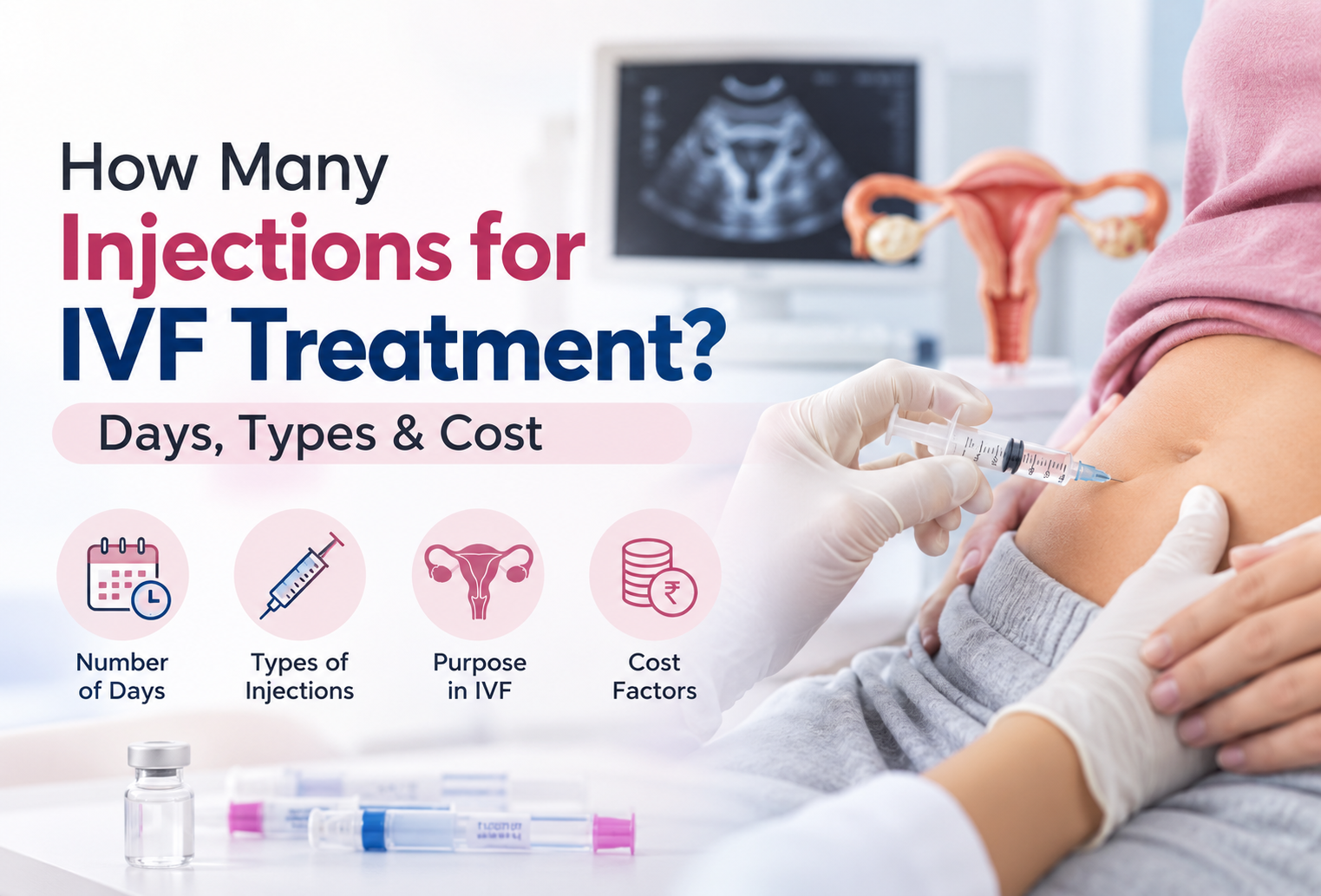
How many injections for IVF treatment?
– Published on 26 Feb 2024
Consult the Best IVF Specialists in Pune
Pune IVF Centre · Pimple Saudagar, Wakad, Hadapsar & Chikhali
How Many Injections Are Needed for IVF Treatment?
One of the most common questions patients have before starting IVF treatment is, “How many injections will I need?”
There is no fixed number of injections that applies to every IVF cycle. The number depends on your treatment protocol, ovarian response, age, ovarian reserve, medication dosage and the type of IVF cycle recommended by your fertility specialist.
During a typical IVF cycle, injections are mainly used to stimulate the ovaries, prevent premature ovulation and help with final egg maturation. Some patients may also require hormonal support after egg retrieval or embryo transfer.
At Pune IVF, the exact injection schedule is decided according to your individual treatment plan and monitoring results.
How Many IVF Injections Are Usually Needed?
Many conventional IVF cycles involve daily stimulation injections for around 8–14 days. Additional injections may be required depending on the protocol, including medication to prevent premature ovulation and a final trigger injection before egg retrieval.
Therefore, there is no single number of injections for every IVF patient.
The total number may vary depending on:
- IVF stimulation protocol
- Age
- Ovarian reserve
- Hormone levels
- Response of the ovaries to medication
- Number of stimulation days
- Whether ovulation-prevention medication is required
- Type of trigger injection
- Whether injectable progesterone is prescribed
Your fertility specialist will determine the appropriate medicines and dosage based on your monitoring scans and clinical condition.
Why Are Injections Used During IVF?
In a natural menstrual cycle, usually one dominant follicle develops and releases an egg.
During IVF, the goal is generally to stimulate the ovaries to develop multiple mature follicles, so that several eggs can potentially be retrieved.
Hormonal injections are therefore used to:
- Stimulate follicle growth
- Support egg development
- Prevent premature ovulation when required
- Complete final egg maturation before retrieval
- Support the uterine lining after retrieval or embryo transfer when prescribed
The medications and their doses are adjusted according to how the ovaries respond during treatment.
Types of Injections Used During IVF
The stimulation phase, with the duration depending on the patient’s response to treatment. Different types of injections may serve various purposes in an IVF cycle.
- FSH Injections
Follicle Stimulating Hormone (FSH) injections are commonly administered during the ovarian stimulation process.
These injections stimulate the ovaries to produce multiple follicles with eggs.
FSH injections are usually administered on a daily basis during the ovarian stimulation stage.
- hMG Injections
There is hormone activity in Human Menopausal Gonadotropin (hMG) which could help to develop the follicles.
Depending on the regimen, it could either be taken alone or combined with other stimulants.
The exact medication and dosage would be determined by the fertility expert.
- Ovulation-Prevention Injections
However, there are some IVF protocols that use medications like GnRH antagonists and agonists to avoid premature ovulation before follicle maturation.
Such medications are not needed by all patients equally.
The need for medication depends on the protocol and the maturity of the follicles.
- Trigger Injection
The trigger shot is administered when the follicles reach the correct stage of development.
The trigger will assist in the maturation of the eggs and will also serve to schedule the egg retrieval process.
You should take the trigger exactly as directed by your infertility team since the egg retrieval procedure is scheduled based on this timing. According to the present IVF cycle info at Pune IVF, the trigger is supposed to be taken about 36 hours before egg retrieval.
5 Progesterone Supplementation
Some patients might be recommended to use progesterone supplementation after the retrieval of the eggs or after transferring the embryos.
Progesterone can be obtained through:
- Vaginal progesterone
- Oral progesterone
- Injected progesterone
The type and period will depend on the protocol and your physician’s advice.
Not all patients require injected progesterone.
How Many Days Are Required For The Injections In IVF?
The injection phase in IVF usually takes about 8-14 days, but sometimes, it may differ from person to person.
Your fertility team will monitor things like:
- The follicle development
- The endometrium
- The hormone levels
- The ovarian response
On the basis of this information, they can modify your medication dosage or schedule.A simple IVF injection timeline
Ovarian stimulation
↓
Daily stimulation injections for approximately 8–14 days
↓
Monitoring through ultrasound and/or blood tests
↓
Additional medication to prevent premature ovulation, if required
↓
Trigger injection
↓
Egg retrieval at the scheduled time
↓
Embryo development
↓
Embryo transfer or embryo freezing
↓
Hormonal support, if prescribed
This is a general overview. Your actual schedule can be different.
How Many Injections Are Needed in One IVF Cycle?
It should be noted that there is no set number of injections for each IVF patient.
For instance, one woman may take injections daily during several days and then take some more drugs and another shot. For another woman, the process can have a totally different pattern.
According to the current Pune IVF article, the stimulation injections may be administered daily from 8 to 14 days, and the last part of the drugs may depend on the treatment schedule. That is why it is better to ask:
“how many injections do I need in my IVF cycle?” “How many injections will I need according to my IVF protocol?”
rather than assuming that every patient will receive the same number.
Why Are Injections Used During IVF?
In a natural menstrual cycle, usually one dominant follicle develops and releases an egg.
During IVF, the goal is generally to stimulate the ovaries to develop multiple mature follicles, so that several eggs can potentially be retrieved.
Hormonal injections are therefore used to:
- Stimulate follicle growth
- Support egg development
- Prevent premature ovulation when required
- Complete final egg maturation before retrieval
- Support the uterine lining after retrieval or embryo transfer when prescribed
The medications and their doses are adjusted according to how the ovaries respond during treatment.
Types of Injections Used During IVF
The stimulation phase, with the duration depending on the patient’s response to treatment. Different types of injections may serve various purposes in an IVF cycle.
1. FSH Injections
Follicle Stimulating Hormone (FSH) injections are commonly administered during the ovarian stimulation process.
These injections stimulate the ovaries to produce multiple follicles with eggs.
FSH injections are usually administered on a daily basis during the ovarian stimulation stage.
2. hMG Injections
There is hormone activity in Human Menopausal Gonadotropin (hMG) which could help to develop the follicles.
Depending on the regimen, it could either be taken alone or combined with other stimulants.
The exact medication and dosage would be determined by the fertility expert.
3. Ovulation-Prevention Injections
However, there are some IVF protocols that use medications like GnRH antagonists and agonists to avoid premature ovulation before follicle maturation.
Such medications are not needed by all patients equally.
The need for medication depends on the protocol and the maturity of the follicles.
4. Trigger Injection
The trigger shot is administered when the follicles reach the correct stage of development.
The trigger will assist in the maturation of the eggs and will also serve to schedule the egg retrieval process.
You should take the trigger exactly as directed by your infertility team since the egg retrieval procedure is scheduled based on this timing. According to the present IVF cycle info at Pune IVF, the trigger is supposed to be taken about 36 hours before egg retrieval.
5 Progesterone Supplementation
Some patients might be recommended to use progesterone supplementation after the retrieval of the eggs or after transferring the embryos.
Progesterone can be obtained through:
• Vaginal progesterone
• Oral progesterone
• Injected progesterone
The type and period will depend on the protocol and your physician’s advice.
Not all patients require injected progesterone
How Many Days Are Required For The Injections In IVF?
The injection phase in IVF usually takes about 8-14 days, but sometimes, it may differ from person to person.
Your fertility team will monitor things like:
- The follicle development
- The endometrium
- The hormone levels
- The ovarian response
On the basis of this information, they can modify your medication dosage or schedule.A simple IVF injection timeline
How Many Injections Are Needed in One IVF Cycle?
It should be noted that there is no set number of injections for each IVF patient.
For instance, one woman may take injections daily during several days and then take some more drugs and another shot. For another woman, the process can have a totally different pattern.
According to the current Pune IVF article, the stimulation injections may be administered daily from 8 to 14 days, and the last part of the drugs may depend on the treatment schedule. That is why it is better to ask:
“how many injections do I need in my IVF cycle?” “How many injections will I need according to my IVF protocol?”
rather than assuming that every patient will receive the same number.
Are IVF Injections Painful?
A majority of the patients get worried about the pain involved in taking IVF injections.
Factors affecting pain include the following:
- Type of injection
- Site of injection
- Type of medication
- The method of administration
- Patients’ sensitivity
While some injections cause a quick pinch, others may cause a sensation of pain, redness, and even bruising.
While most of the stimulatory medicines are taken through the skin, others may be taken in another way.
IVF clinic can help you learn the right way of administering injections at your home.
What Are the Side Effects of IVF Injections?
Some individuals will have some mild side effects while undergoing the process of ovarian stimulation.
This includes:
- Feeling bloated
- Abdominal pain
- Breast tenderness
- Headaches
- Mood swings
- Difficulty breathing
- Pain and redness around the injection site
Every individual experiences this differently.
In case of severe abdominal pains, excessive swelling, difficulty breathing, fast weight gain, among other alarming side effects, please consult your fertility specialist immediately.
Never change or discontinue the medicines prescribed for your IVF treatment program without consulting your doctor.
How much does an IVF Injection cost?
There is no set price tag for the cost of IVF injections.
This may be based on:
- Medications used
- The dosage required
- The number of days on stimulation
- Response of the individual patient
- Protocol of treatment
- Other medicines used
- Injectable progesterone or not
So, there could be different costs for injection for different people.
For knowing more about costs associated with the IVF procedure, patients can consult their infertility expert.
Tips for Managing IVF Injections
Taking different medications may be overwhelming at first. But some simple tips may help make the procedure more manageable.
Write down your schedule
Include the following:
- Drug name
- Amount to take
- Date
- Time
- Instructions on how to give the shot
Use an alarm reminder
Use the alarm on your phone to remind yourself about the scheduled time for the shot.
Follow the same instructions
Always adhere to the instructions given by your fertility specialists.
Rotate the injection sites
Your fertility specialists may instruct you to do this.
Clarify any doubt you have
If you have any doubts about the instructions on how to take the shots, contact your fertility specialists.
When Should You Speak to a Fertility Specialist?
.If you are considering IVF and are concerned about injections, your fertility specialist can explain:
- Which injections you may need
- How many days they may be required
- When each medicine should be taken
- Possible side effects
- How monitoring will be performed
- Expected treatment-related costs
The exact IVF protocol is decided after evaluating your fertility history, investigations and treatment requirements.
Frequently Asked Questions About IVF Injections
No. IVF medication and injection schedules are individualized according to factors such as ovarian reserve, age, hormone levels and response to stimulation.
There is no single fixed cost. The amount depends on the medicines, dosage, number of days and individual treatment requirements.
After the trigger injection, egg retrieval is performed at the scheduled time. The eggs are then fertilized in the laboratory and embryos may be transferred or frozen depending on the treatment plan.
Contact your fertility clinic as soon as possible. Do not take an additional dose on your own.
Some patients experience only mild discomfort, while others may experience soreness or bruising. The level of discomfort depends on the medication, injection type and individual sensitivity
Depending on the protocol, IVF may involve FSH, hMG, medicines to prevent premature ovulation, a trigger injection and hormonal support such as progesterone.
The stimulation phase commonly lasts around 8–14 days, but it can vary depending on how the ovaries respond to treatment.
A trigger injection is given when the follicles are ready. It helps with final egg maturation and is carefully timed before egg retrieval.
After the trigger injection, egg retrieval is performed at the scheduled time. The eggs are then fertilized in the laboratory and embryos may be transferred or frozen depending on the treatment plan.
Contact your fertility clinic as soon as possible. Do not take an additional dose on your own.

By Dr Samidha Dalvi-Amale
IVF and Fertility specialist Medical Director- Pune IVF