
Consult the Best IVF Specialists in Pune
Pune IVF Centre · Pimple Saudagar, Wakad, Hadapsar & Chikhali
For couples undergoing IVF (In Vitro Fertilization), every stage of the treatment plays an important role in achieving a successful pregnancy. While embryo quality often receives the most attention, the health of the uterine lining, also known as the endometrium, is equally important. A healthy endometrium provides the ideal environment for the embryo to implant and grow.
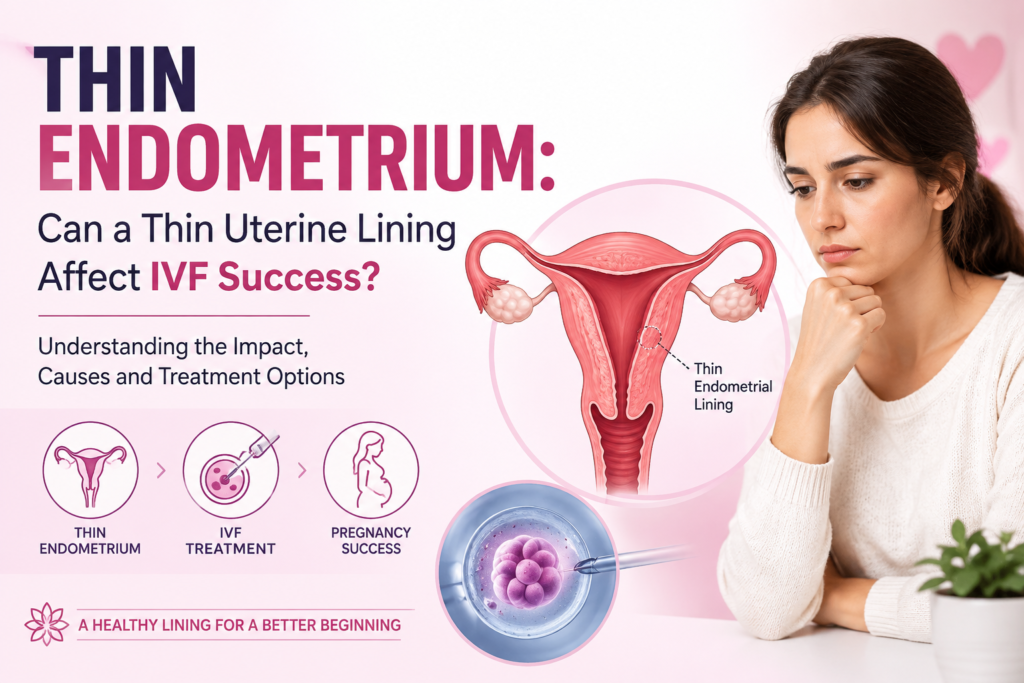
If your doctor has told you that you have a thin endometrium, you may wonder whether it can reduce your chances of IVF success. The good news is that a thin uterine lining does not always prevent pregnancy, and several treatment options are available to improve implantation outcomes.
In this blog, we’ll explain what a thin endometrium is, its causes, its impact on IVF success, and the treatment options available.
What Is the Endometrium?
The endometrium is the soft inner lining of the uterus. During every menstrual cycle, it thickens under the influence of estrogen to prepare for a possible pregnancy. If fertilization occurs, the embryo implants into this lining and begins to grow.
For successful implantation during IVF, the endometrium should be healthy, well-supplied with blood, and thick enough to support embryo development.
What Is Considered a Thin Endometrium?
A thin endometrium generally refers to an endometrial thickness of less than 7 mm around the time of embryo transfer. This measurement is usually checked using a transvaginal ultrasound during an IVF cycle.
Although some women with a thinner lining can still conceive, studies have shown that implantation rates may be lower when the uterine lining does not reach an optimal thickness.
Can a Thin Endometrium Affect IVF Success?
Yes, a thin uterine lining can influence IVF outcomes. The embryo needs a receptive environment to implant successfully. When the endometrium is thinner than expected, implantation may become more challenging.
A thin endometrium may:
- Reduce the chances of embryo implantation
- Increase the likelihood of IVF cycle cancellation in some cases
- Lower pregnancy success rates
- Affect blood supply to the developing embryo
However, it’s important to remember that a thin endometrium does not automatically mean IVF will fail. Many women with a thinner lining have achieved healthy pregnancies with proper treatment and individualized care.
Causes of Thin Endometrium
Several factors can contribute to a thin uterine lining, including:
- Low Estrogen Levels
Estrogen is responsible for building the uterine lining. Hormonal imbalance or poor ovarian function can limit endometrial growth.
- Reduced Blood Flow to the Uterus
Poor circulation may prevent the endometrium from receiving enough oxygen and nutrients needed for healthy development.
- Previous Uterine Procedures
Repeated D&C procedures, fibroid removal, or uterine surgeries can sometimes damage the endometrial lining.
- Uterine Infections
Chronic infections such as endometritis may affect the health and thickness of the uterine lining.
- Asherman’s Syndrome
Scar tissue inside the uterus can significantly reduce endometrial thickness and interfere with implantation.
- Certain Medications
Some fertility medications or long-term hormonal treatments may affect endometrial development in certain women.
How Is Thin Endometrium Diagnosed?
Your fertility specialist will evaluate the uterine lining using:
- Transvaginal ultrasound to measure endometrial thickness
- Doppler ultrasound to assess blood flow
- Hysteroscopy if uterine abnormalities are suspected
- Hormonal blood tests to evaluate estrogen and other reproductive hormones
These investigations help identify the underlying cause and guide the most appropriate treatment plan.
Treatment Options for Thin Endometrium
Treatment depends on the underlying cause and your overall fertility health.
Estrogen Therapy
Estrogen medications are commonly prescribed to encourage the endometrium to thicken before embryo transfer.
Improved Blood Flow
Doctors may recommend certain medications, supplements, or lifestyle changes that help improve blood circulation to the uterus.
Platelet-Rich Plasma (PRP)
Some fertility centers use PRP therapy to promote endometrial regeneration in carefully selected patients, although research is still ongoing.
Treating Underlying Conditions
If infections, scar tissue, or hormonal disorders are present, treating these conditions can improve the uterine environment.
Personalized IVF Protocols
Your fertility specialist may adjust medication dosages, timing, or recommend freezing embryos and transferring them in a later cycle when the endometrium is more receptive.
Can Pregnancy Still Happen with a Thin Endometrium?
Yes. Pregnancy is still possible, even with a thin uterine lining. While thicker endometrial lining is generally associated with better implantation rates, many factors contribute to IVF success, including:
- Embryo quality
- Maternal age
- Overall uterine health
- Hormonal balance
- Skilled fertility care
Every patient is different, which is why personalized treatment is essential.
Tips to Support a Healthy Endometrium
Although medical treatment is often necessary, maintaining a healthy lifestyle may also support reproductive health.
- Eat a balanced diet rich in fruits, vegetables, whole grains, and protein.
- Stay physically active to improve blood circulation.
- Maintain a healthy body weight.
- Avoid smoking and excessive alcohol.
- Follow your fertility specialist’s medication schedule carefully.
- Manage stress through relaxation techniques and adequate sleep.
These healthy habits may help support your overall fertility journey.
When Should You Consult a Fertility Specialist?
If you have experienced repeated IVF failure, recurrent implantation failure, or your doctor has identified a thin endometrium during fertility treatment, it’s important to seek expert evaluation. Early diagnosis allows your fertility specialist to identify the underlying cause and recommend the most suitable treatment approach.
Conclusion
A thin endometrium can affect IVF success, but it is not the end of your fertility journey. With accurate diagnosis, individualized treatment, and advances in reproductive medicine, many women with a thin uterine lining go on to achieve successful pregnancies.
If you are planning IVF or have concerns about your uterine lining, consulting an experienced fertility specialist can help improve your chances of implantation and a healthy pregnancy.
Frequently Asked Questions
A thin endometrium refers to a uterine lining that does not develop adequately during the menstrual cycle. Since the embryo implants into this lining, an underdeveloped endometrium may reduce the chances of successful implantation and pregnancy, particularly during IVF treatment.
Yes. A thin endometrial lining may lower the likelihood of embryo implantation, even when good-quality embryos are available. However, IVF success depends on several factors, including embryo quality, maternal age, hormone levels, and overall uterine health—not just endometrial thickness
Common causes include:
- Low estrogen levels
- Reduced blood flow to the uterus
- Previous uterine surgeries or D&C procedures
- Intrauterine adhesions (Asherman’s syndrome)
- Chronic uterine infections or inflammation
- Certain fertility medications or hormonal imbalances
A fertility specialist usually evaluates the uterine lining through a transvaginal ultrasound during your menstrual cycle. If needed, additional investigations such as hysteroscopy, hormone testing, or assessment for uterine infection or scarring may be recommended.
Yes. Treatment depends on the underlying cause and may include hormone therapy, adjustments to the IVF protocol, treatment of uterine adhesions or infections, or postponing embryo transfer until the lining is more receptive. Your fertility specialist will recommend the most appropriate approach for your situation.
There is no single cutoff that guarantees success. Many fertility specialists consider an endometrial thickness of around 7 mm or more to be reassuring before embryo transfer, although successful pregnancies have occurred with thinner linings in some cases. The quality and receptivity of the lining are also important.
Maintaining a healthy lifestyle with a balanced diet, regular physical activity, adequate hydration, stress management, and avoiding smoking may support overall reproductive health. However, if you have a persistently thin endometrium, medical evaluation and personalized treatment are essential rather than relying solely on home remedies.
You should consult a fertility specialist if you have experienced repeated IVF implantation failure, recurrent miscarriages, very light menstrual periods, or if your scans consistently show a thin uterine lining. Early diagnosis and individualized treatment can help optimize your chances of a successful pregnancy.