
Consult the Best IVF Specialists in Pune
Pune IVF Centre · Pimple Saudagar, Wakad, Hadapsar & Chikhali
Trying to conceive can be an emotional journey. While many couples become pregnant within a year of regular, unprotected intercourse, others may experience unexpected delays. If you’re asking yourself, “Why am I not getting pregnant?”, you’re not alone. Infertility affects millions of couples worldwide, and in many cases, the causes can be identified and treated with the right medical care.
Infertility is not just a women’s health issue. Both female infertility and male infertility contribute equally to difficulties in conception. Understanding the possible reasons behind infertility is the first step toward finding the right treatment and improving your chances of having a baby.
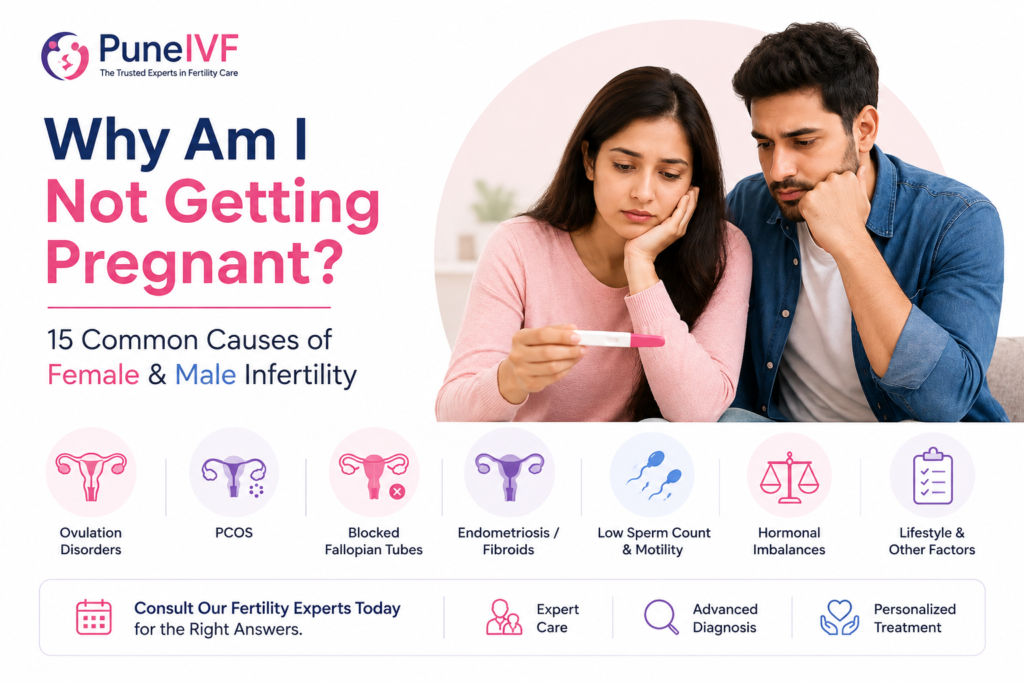
In this blog, we’ll explore the 15 most common causes of infertility in both women and men.
What Is Infertility?
Infertility is defined as the inability to achieve pregnancy after 12 months of regular, unprotected intercourse if the woman is under 35 years of age. For women aged 35 years and older, evaluation is recommended after six months of trying.
Infertility may result from issues affecting either partner or, in some cases, both. Fortunately, advances in fertility treatments have helped many couples successfully achieve pregnancy.
Common Causes of Female Infertility
- Ovulation Disorders
Ovulation problems are one of the leading causes of female infertility. If the ovaries do not release an egg regularly, pregnancy cannot occur.
Common conditions include:
- Polycystic Ovary Syndrome (PCOS)
- Hormonal imbalance
- Premature ovarian insufficiency
Irregular or absent periods often indicate ovulation issues.
- Blocked Fallopian Tubes
The fallopian tubes carry the egg from the ovary to the uterus. If they are blocked due to infection, endometriosis, or previous surgery, fertilization becomes difficult because sperm cannot reach the egg.
- Endometriosis
Endometriosis occurs when tissue similar to the uterine lining grows outside the uterus. It may affect the ovaries, fallopian tubes, and surrounding pelvic organs, reducing fertility and causing pain.
- Age-Related Decline in Fertility
Female fertility naturally declines with age, especially after 35 years. Both egg quantity and quality decrease, making conception more challenging and increasing the risk of miscarriage.
- Uterine Problems
Structural abnormalities such as fibroids, uterine polyps, congenital uterine abnormalities, or scar tissue can interfere with embryo implantation or pregnancy.
- Thin Endometrium
The endometrium is the lining of the uterus where the embryo implants. A thin uterine lining may reduce implantation rates during natural conception and IVF treatment.
- Hormonal Imbalances
Hormones regulate ovulation and prepare the uterus for pregnancy. Thyroid disorders, elevated prolactin levels, or other endocrine conditions can affect fertility.
- Lifestyle Factors
Smoking, obesity, excessive alcohol intake, chronic stress, poor nutrition, and lack of physical activity can negatively impact reproductive health and reduce fertility.
Common Causes of Male Infertility
- Low Sperm Count
Low sperm count is one of the most common causes of male infertility. Fewer healthy sperm reduce the chances of successful fertilization.
- Poor Sperm Motility
Even if sperm count is normal, sperm must swim efficiently to reach and fertilize the egg. Reduced sperm movement can make natural conception difficult.
- Abnormal Sperm Shape
Sperm with abnormal structure may struggle to fertilize an egg. This condition is known as abnormal sperm morphology.
- 1 Varicocele
A varicocele is an enlargement of veins within the scrotum that may increase testicular temperature and affect sperm production and quality. It is one of the most treatable causes of male infertility.
- Hormonal Disorders in Men
Low testosterone or problems involving the pituitary gland can interfere with sperm production and fertility.
- Infections and Medical Conditions
Certain infections, sexually transmitted diseases, diabetes, previous surgeries, or cancer treatments may affect sperm production or block sperm transport.
- Lifestyle and Environmental Factors
Smoking, excessive alcohol consumption, recreational drug use, exposure to heat, pesticides, industrial chemicals, and prolonged stress can reduce sperm quality and fertility.
When Should You Seek Fertility Evaluation?
You should consult a fertility specialist if:
- You have been trying to conceive for over one year.
- The woman is over 35 years and has been trying for six months.
- Menstrual cycles are irregular or absent.
- There is a history of miscarriage.
- Either partner has a known reproductive health condition.
- The male partner has previously undergone testicular surgery, chemotherapy, or has abnormal semen analysis.
Early evaluation often leads to faster diagnosis and more effective treatment.
How Is Infertility Diagnosed?
A fertility specialist may recommend several tests depending on your medical history.
For women:
- Ovulation assessment
- Hormonal blood tests
- Pelvic ultrasound
- Hysterosalpingography (HSG) to check fallopian tubes
- Hysteroscopy or laparoscopy when needed
For men:
- Semen analysis
- Hormonal evaluation
- Scrotal ultrasound
- Physical examination
These tests help identify the underlying cause and guide treatment decisions
Treatment Options for Infertility
Treatment depends on the specific cause of infertility and may include:
- Lifestyle modifications
- Ovulation-inducing medications
- Hormonal therapy
- Surgical correction of reproductive problems
- Intrauterine Insemination (IUI)
- In Vitro Fertilization (IVF)
- Intracytoplasmic Sperm Injection (ICSI) for severe male infertility
Many couples achieve successful pregnancies with personalized fertility treatment plans.
Can Lifestyle Changes Improve Fertility?
Yes. Healthy lifestyle habits can support reproductive health in both men and women.
Some simple steps include:
- Maintain a healthy weight.
- Eat a balanced diet rich in fruits, vegetables, whole grains, and lean protein.
- Exercise regularly.
- Avoid smoking, alcohol, and recreational drugs.
- Get adequate sleep.
- Manage stress through yoga, meditation, or relaxation techniques.
- Follow your doctor’s advice regarding supplements and medications.
Although lifestyle changes may not solve every fertility problem, they can improve overall reproductive health and increase the chances of conception.
Frequently Asked Questions
Ovulation disorders in women and low sperm count in men are among the most common causes of infertility.
If you’re under 35 and haven’t conceived after one year, or over 35 and haven’t conceived after six months, it’s time to seek expert evaluation.
Yes. Depending on the cause, infertility can often be managed with medications, surgery, IUI, IVF, or ICSI.
Yes. Female fertility declines significantly after age 35, while male fertility may also gradually decrease with age.
Yes. Approximately one-third of infertility cases are related to female factors, one-third to male factors, and the remaining cases involve both partners or unexplained infertility.